




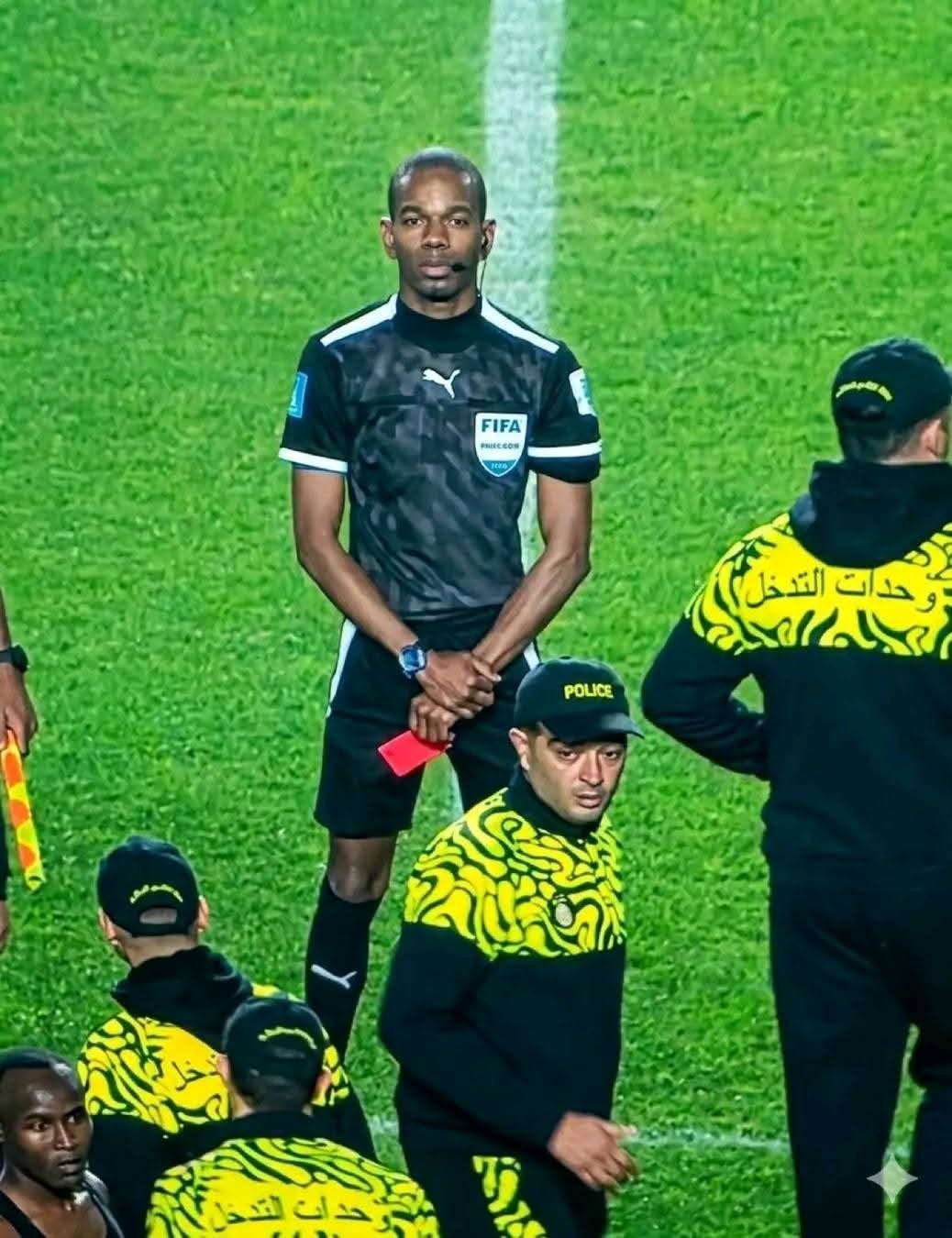
Red Card Warning: Issa Sy’s Post-Match "Gesture" Sparks Continental Debate
In a high-pressure CAF Champions League quarter-final clash at the Stade Olympique Hammadi Agrebi on March 15, 2026, the final whistle didn’t mark the end of the drama. As Espérance de Tunis celebrated a narrow 1-0 lead to take to Cairo—secured via a 73rd-minute Mohamed Amine Tougai penalty—the focus shifted to match official Issa Sy and his unique handling of post-match tensions.
The “Defensive” Red Card
As the Al Ahly players, frustrated by the penalty decision and eight minutes of stoppage time, began to converge on the officiating team, Sy did something rarely seen in the professional game. He preemptively raised a red card—not to dismiss a specific player, but as a symbolic “shield” to warn the Egyptian side against making any aggressive approaches.
The tactic, while bizarre, proved remarkably effective. The Al Ahly contingent, seeing the card held high, halted their advance and eventually retreated to the dressing rooms without further incident.
Law 12 vs. Game Management
The gesture has since ignited a firestorm of debate among football purists and former referees.
The Critique: Under IFAB Law 12, cards are strictly communication tools used to signify a formal disciplinary sanction (a caution or a sending-off) for a specific offense. Critics argue that using the card as a tool of “intimidation" or “deterrence” without a recorded foul is a technical breach of officiating protocol.
The Praise: Conversely, many African football analysts have lauded Sy’s “emotional intelligence.” In a rivalry as fierce as Al Ahly vs. Espérance, refereeing teams often face physical intimidation; Sy’s quick thinking arguably prevented a confrontation that would have led to actual suspensions and heavy CAF fines.
A History of Tension
Issa Sy is no stranger to the spotlight in this fixture. Just last year, Al Ahly filed a formal complaint to CAF regarding his officiating in their Round of 32 clash. By taking this proactive, albeit controversial, stance in Rades, Sy ensured that the narrative remained on the football—at least until the return leg in Cairo on March 21.
”A referee's job is to manage the game, and sometimes that requires a bit of theater to keep the peace,” noted one CAF match observer.